Lorem ipsum dolor sit amet, consectetur adipiscing elit. Vestibulum id hendrerit risus, non imperdiet ex.
Sensation Kinetics is a practical method for influencing the body’s physical and emotional state by working directly with sensation. While the techniques themselves are simple and experiential, they draw on several well-established areas of science that describe how the brain and body communicate.
Rather than relying on belief or abstract concepts, Sensation Kinetics works with processes that already exist within the human nervous system.
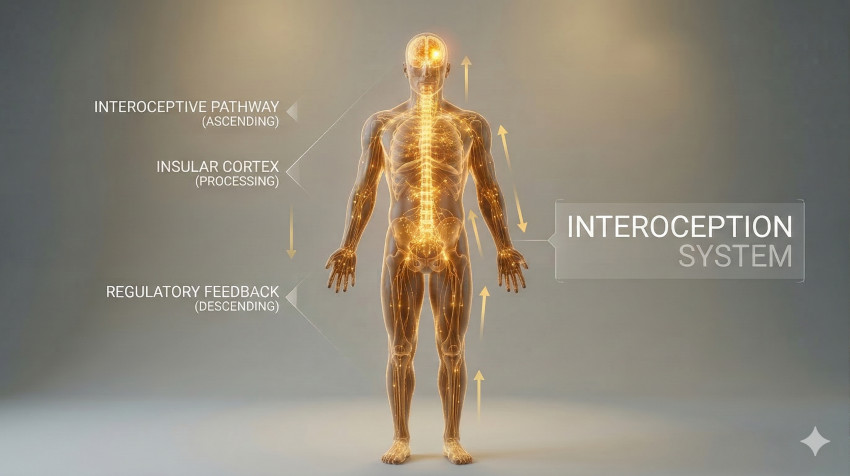
Interoception: The Body’s Internal Sensing System
Interoception is the brain’s ability to sense and interpret signals from inside the body. These signals include sensations such as pressure, tension, warmth, discomfort, and emotional feeling.
Research in neuroscience shows that interoception plays a central role in how we experience emotions, regulate stress, and maintain physical balance in the body. By learning to observe and influence internal sensations directly, Sensation Kinetics works through this natural sensory channel.
Instead of ignoring or suppressing sensations, the method teaches you to interact with them consciously.
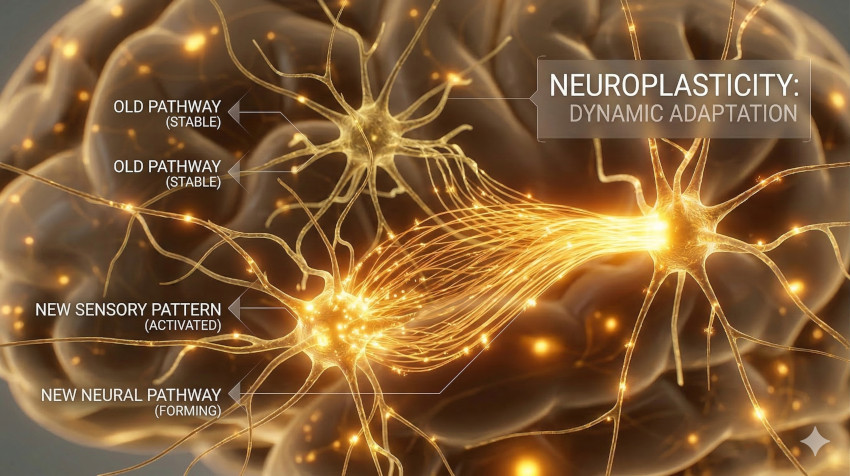
Neuroplasticity: The Brain’s Capacity to Change
The nervous system is not fixed. Through a process known as neuroplasticity, the brain continually reorganises itself based on experience.
When new sensory patterns are introduced or reinforced, neural pathways can shift and adapt. Sensation Kinetics leverages this natural capacity by introducing new internal sensory signals that encourage the body to move toward more balanced states.
Over time, the nervous system learns from these experiences, making the response easier and more natural.
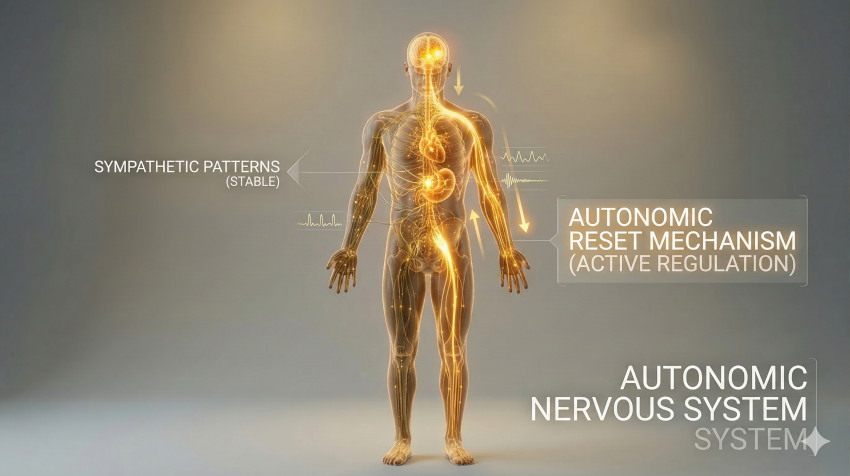
The Autonomic Nervous System
Many of the body’s most important processes operate automatically through the autonomic nervous system. This includes heart rate, stress responses, muscle tension, and immune signalling.
When the nervous system becomes stuck in patterns of stress or discomfort, the body can struggle to return to equilibrium.
Sensation Kinetics interacts with this system through sensory feedback. By introducing specific internal sensations and directing attention in particular ways, it becomes possible to influence how the nervous system settles and resets.
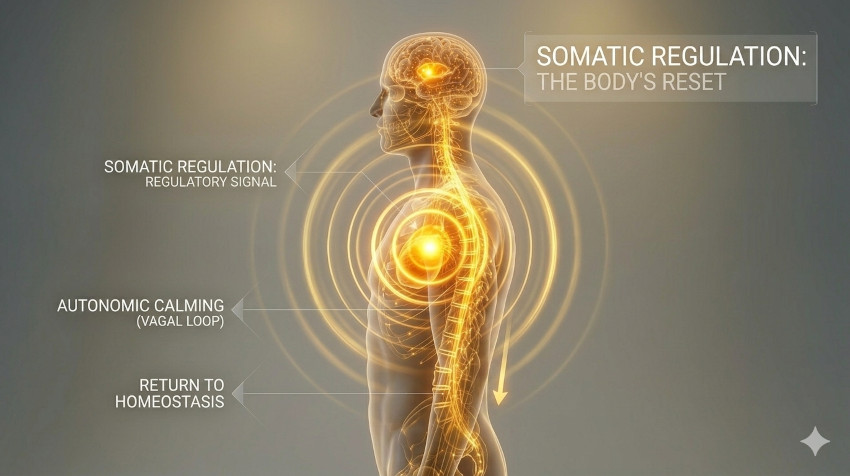
Somatic Regulation
The nervous system is not fixed. Through a process known as neuroplasticity, the brain continually reorganises itself based on experience.
When new sensory patterns are introduced or reinforced, neural pathways can shift and adapt. Sensation Kinetics leverages this natural capacity by introducing new internal sensory signals that encourage the body to move toward more balanced states.
Over time, the nervous system learns from these experiences, making the response easier and more natural.
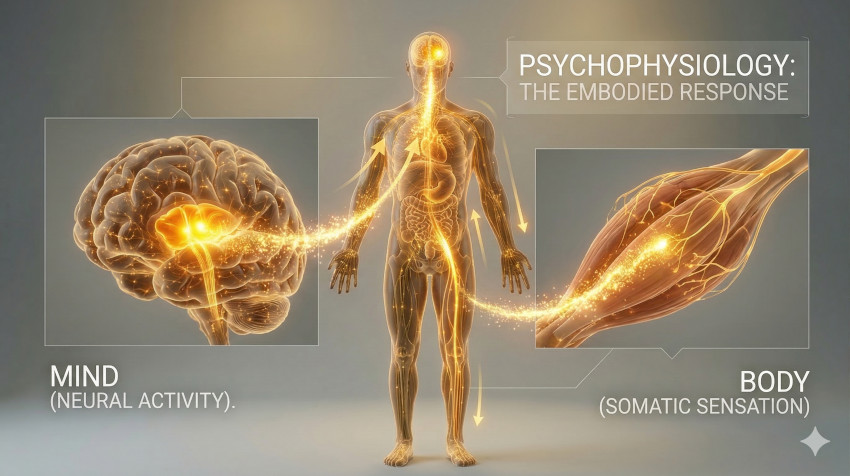
Psychophysiology: The Link Between Mind and Body
Psychophysiology studies the relationship between psychological experience and physical processes in the body. Emotions are not purely mental events. They are patterns of physical sensation, chemical signalling, and nervous system activity occurring simultaneously.
Because sensations are part of this system, influencing sensation can influence emotional and physiological states as well.
Sensation Kinetics operates at this interface between mind and body, using sensation as the point of interaction.
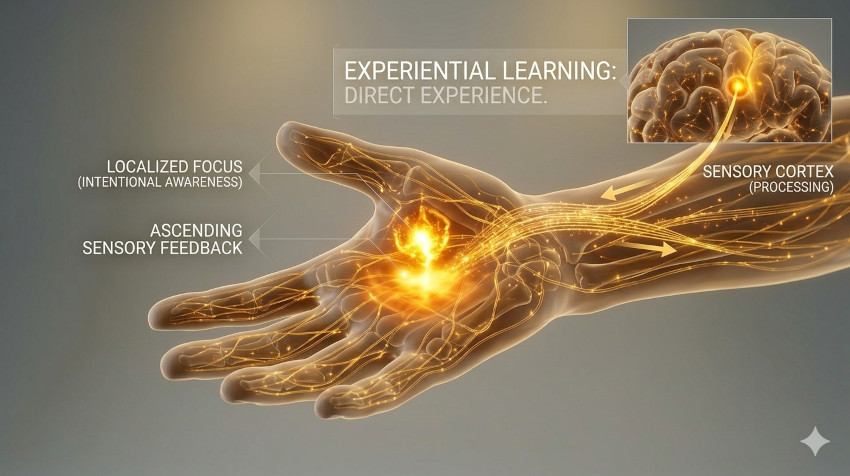
Experiential Learning
Perhaps the most important aspect of Sensation Kinetics is that it is learned through direct experience.
Instead of requiring belief or complex theory, the techniques are practiced and verified through what you can feel in your own body.
This hands-on approach allows people to develop a practical skill set for influencing their own physical and emotional state.
Sensation Kinetics does not ask you to accept any particular philosophy or worldview. It is a practical method built around the direct observation and influence of sensation.
The principles that support it are already present in the body. Sensation Kinetics simply provides a structured way to work with them.
The result is a set of skills that allow you to engage with your body’s natural regulatory systems in a conscious and practical way.